As the world shifts towards more
technological advancement, it faces an equal
share of the risks of escalating threats. 2025
was a critical year for India as cyber threats had
reached alarming levels with over 265 million to
369 million reported malwares. The sectors
mainly targeted were education, manufacturing
and healthcare. September 2025 averaged with
more than 727,000 detections per day with
Trojans and file infectors contributing to nearly
70% of incidents. With a 24% spike in cyber-
crimes there were significant financial losses
from investment scams.
As we stepped into 2026 threats started
emerging from stealthier AI driven attacks with
India remaining high on edge over a persistent
climate of high volume threats in cyber security.
India holds an impressive position in its
commitments towards global cybersecurity,
ranking in a top tier of the ITU's Global
Cybersecurity Index 2024 reflecting its robust
technical, legal, organizational, capacity
building pillars, and the presence of existing
cyber threats in cyber security reflect gaps in
execution in national preparedness.
As digital infrastructure and e-governance
platforms expand and scale across both centre
and state governments, NIC Services Inc. (NICSI)
focuses on embedding cyber security as a core
digital infrastructure. Under the strategic
leadership of its Managing Director, Shri Alok
Tiwari, NICSI plays an integral role in bolstering ICT solutions, data centers, cloud computing
and cyber security frameworks.
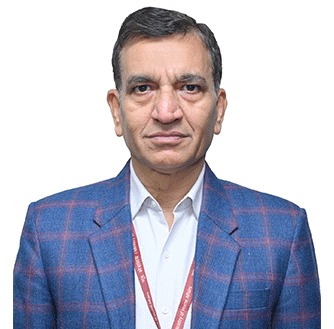
In this exclusive interview, Shri Alok Tiwari
shares his dynamic insights on the role of NICSI,
innovative steps to counter threats, strategies
for technological upscale for a more secure
climate for the Indian Digital landscape.
1. From a government digital infrastructure
perspective, how do you see the role of cyber
security evolving as India scales its digital
public platforms and e-governance systems?
The evolution of cyber security in India’s digital infrastructure has been quite robust. There have been rapid changes in computing resources and infrastructure that are greatly impacting various platforms. Cyber security plays a very vital role for AI, LLM models, GPUs and cloud computing. Cyber security is imperative across multiple levels. It is needed at perimeter, application as well as compliance levels. By 2028 Quantum computing is expected to challenge current security measures. The government of India has changed the allocation of business in terms of cyber security. The government is adapting by setting up CISOs and deputy CISOs across the ministries. A Government Security Operation Centre (GSOC) is being established at Shastri Park, Delhi. Using AI analytics the GSOC will predict and mitigate attacks. Sovereign cloud initiatives are being explored. Indian developed firewalls, switches and security tools are being showcased across various platforms.
2. NICSI plays a critical role in enabling technology adoption across ministries and public institutions. What are the key cyber security and digital trust priorities emerging across government projects today?
Many monolithic structures became obsolete after 2022 that slows efficient cloud resource use. Today, Government systems are transitioning from monolithic to micro services architecture for better cloud optimization and hyperscaler utilization. Cloud resources are being utilized more efficiently.
New stacks like Rural stack, Agri stack, and PDS stack are being developed using micro services. There is a gradual shift from owning data centres to cloud based services.
3. As government procurement increasingly includes advanced technologies, what considerations should industry keep in mind while designing secure, scalable, and compliant solutions for public use?
India lags far behind in cyber security maturity. There are many industry considerations for secure government solutions. Firstly, there is a need for more Indian –made cyber security equipment like firewalls, switches, etc, many of which are being sourced from abroad. There is a lack of Indian companies that are producing networking components. Also, Government tenders too often struggle to find ‘Make in India’ partners with many tenders and few bidders. The industry must step up to address the gaps. But things look optimistic as universities like BITS Pilani and Amrita University are stepping up with R & D cells and developing small scale solutions.
4. In your view, how can industry platforms like IFSEC India support stronger collaboration between government bodies and technology providers in strengthening India’s security ecosystem?
IFSEC India has a big role to support stronger collaboration between government bodies and tech providers and can bring government and industry closer together. This can be done by organising platforms like workshops and discussions at state and national levels for opening a dialogue. It can assist industry to understand the governmental requirements for equipment, tools (firewalls, routers, etc) and compliance. It can also facilitate better utilization of funds for cyber security initiatives.
5. How do you see AI, analytics, and other emerging technologies shaping the future of cyber security and digital governance in India?
The impact of AI and Analytics on cyber security and digital governance is vital. The current focus is on developing dashboards and basic analytics which are still required at the departmental level. There is a greater need for AI enabled tools in analytics for better prediction capabilities. I also feel large consulting firms should improve their use of AI in analytics. There is a requirement for intelligent dashboards that can predict trends based on project profiles. Consultancy firms must be properly engaged and trained with built capacity. Industry driven change should deliver AI analytics services to both departments and ministries.
6. Looking ahead, what are the key focus areas for strengthening India’s cyber security and digital resilience over the next five years?
There are many areas to focus on for strengthening India’s cyber security and digital resilience. The centralised government SOC (Security Operations Center) will analyse feeds from all states, UTs and major applications. There would be more efforts at improvement in analytics and inference capabilities. Plans are also to create more SOCs in industry and government. There would be use of intelligent tools and regular updating of security infrastructure. Outdated hardware should be discarded. Currently we are short in cyber security awareness of about 27 % when compared to 5% of western counterparts, so the awareness of cyber security needs to be scaled up. Also, there must be emphasis on collaboration between IFSEC India and government for workshops, seminars and working groups at state, central and district levels for nationwide improvement over the next five years and in the future.