
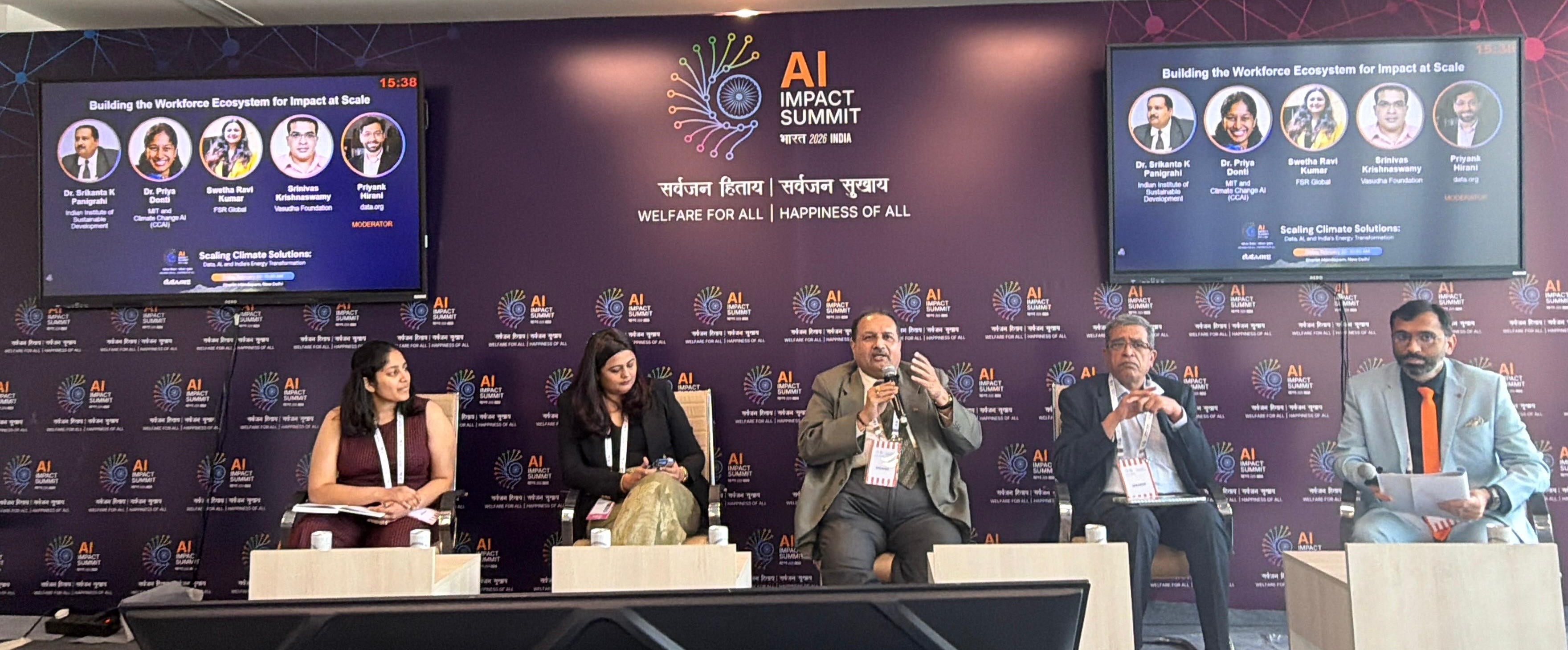
At the recent AI Summit in New Delhi, Dr. Srikanta K. Panigrahi, Director General of the Indian Institute of Sustainable Development (IISD) and a respected voice in the sustainability space, shared an engaging perspective on India’s energy transition. He spoke about how the powerful convergence of renewable energy, advanced data systems, and Artificial Intelligence is not only helping the country address pressing climate challenges, but also unlocking new opportunities for economic growth and innovation. Emphasizing the need for stronger synergy between technology, policy, and investment, Dr. Panigrahi highlighted that India’s journey is fast emerging as a model that could shape global climate action.
Read his authored article to explore his insights and vision for building a smarter, greener, and more resilient future.
India is undergoing one of the most ambitious energy transformations in the world. As a rapidly expanding economy with rising electricity demand, urbanization, industrial growth, and digital expansion, the country faces a dual imperative: sustain economic momentum while dramatically reducing carbon intensity. The scale of this challenge is immense. Yet so is the opportunity.
The convergence of renewable energy, advanced data systems, and Artificial Intelligence (AI) is redefining how India approaches climate solutions. This transition is no longer limited to adding more solar panels or wind turbines. It is about redesigning the entire energy ecosystem, from generation and transmission to consumption and optimization, through digital intelligence.
For corporate leaders, investors, policymakers, and sustainability professionals, India’s energy transition is not just a climate story. It is a story of economic competitiveness, technological leadership, and long-term resilience.
The Structural Shift in India’s Energy Landscape
India’s energy mix has historically been dominated by coal. While coal continues to provide baseload stability, renewable energy capacity has expanded at an unprecedented pace over the past decade. Landmark installations such as the Bhadla Solar Park have positioned India among the world’s largest solar energy producers.
Simultaneously, wind corridors in Gujarat and Tamil Nadu, rooftop solar expansion in urban centers, and emerging green hydrogen initiatives are diversifying the country’s energy portfolio. This structural shift is driven by policy ambition, falling renewable costs, climate commitments, and investor appetite for sustainable infrastructure.
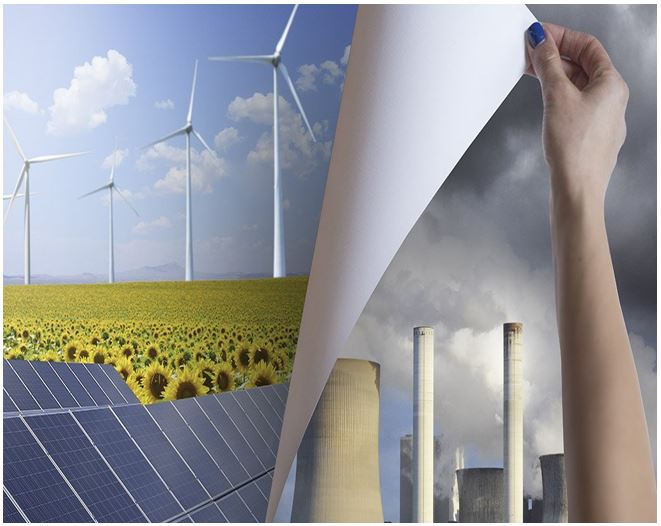
However, scaling renewables introduces complexity. Solar and wind are variable. Electricity demand fluctuates hourly. Grid stability requires balance at every second. The energy system must now become intelligent.
This is where data and AI move from supportive technologies to foundational enablers.
The Digital Layer Powering the Transition
Every component of the modern energy ecosystem generates data:
- Solar farms produce generation metrics at minute intervals
- Wind turbines transmit performance diagnostics
- Smart meters capture real-time consumption patterns
- Weather satellites deliver predictive climate data
- EV charging stations report load and timing
India’s broader digital ecosystem, strengthened by initiatives like Digital India, has created an environment where large-scale data integration is possible. High connectivity, cloud adoption, and digital identity infrastructure make the energy sector’s transformation more scalable than ever before.
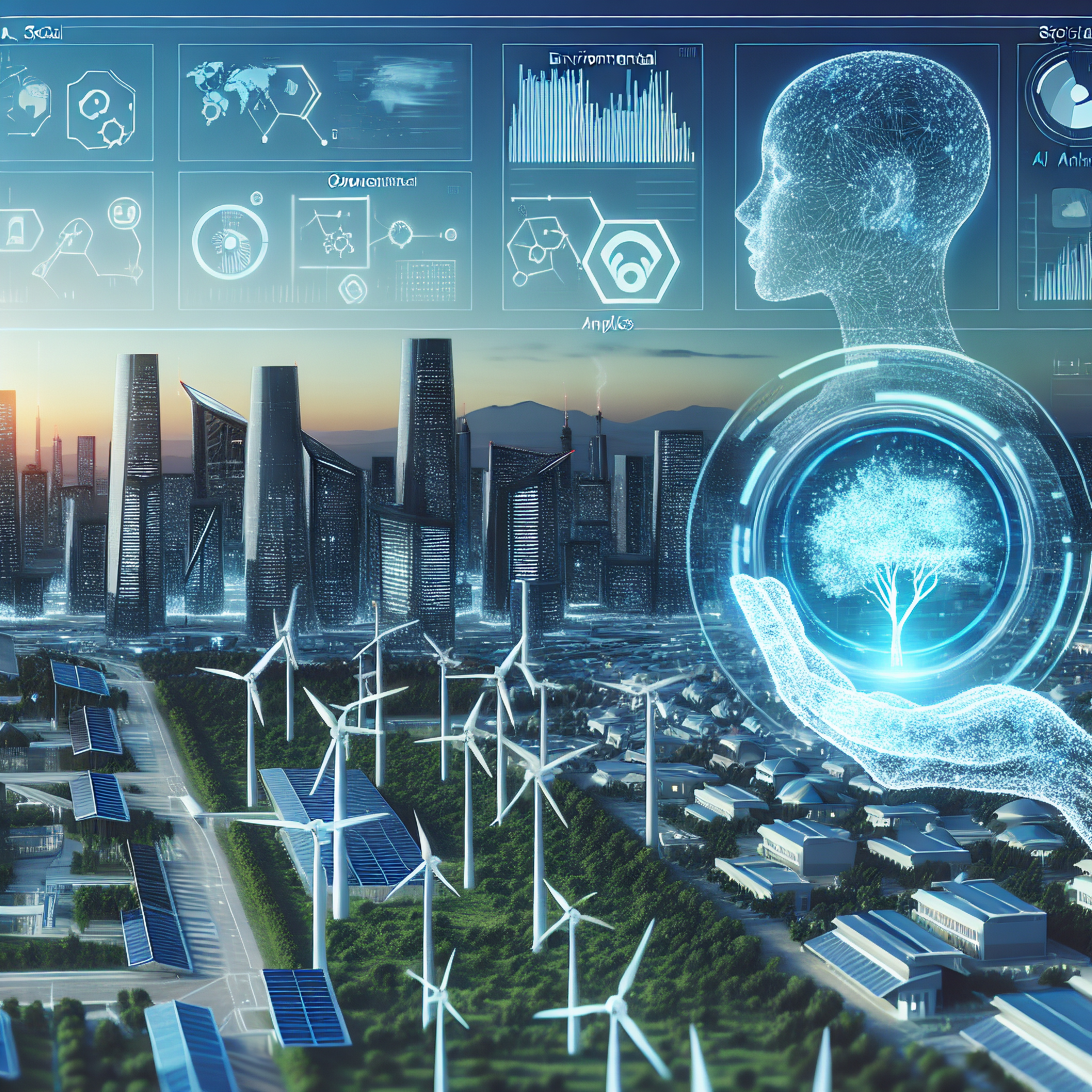
The real breakthrough, however, lies in applying Artificial Intelligence to this data.
AI systems can forecast renewable output, anticipate demand peaks, optimize energy storage, reduce grid congestion, and predict equipment failures before they occur. In essence, AI converts data streams into operational intelligence.
Renewable Integration: From Intermittency to Predictability
Renewable energy variability is one of the most cited barriers to scaling clean power. AI addresses this challenge through predictive modeling.
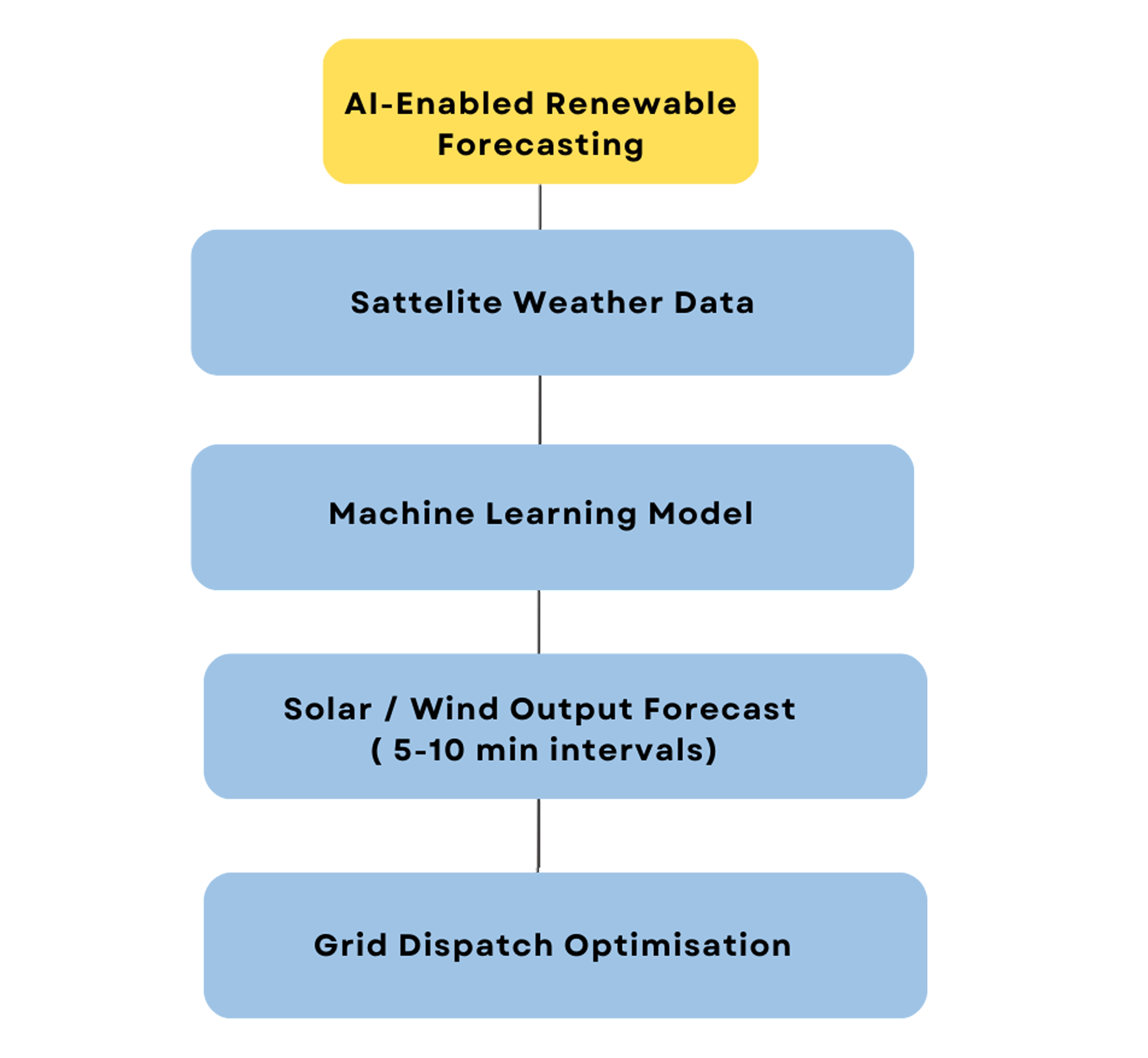
Machine learning models trained on historical irradiance, wind velocity, humidity, and generation data can predict output with remarkable accuracy. This reduces reliance on expensive standby fossil fuel capacity and lowers renewable curtailment.
Transmission entities such as Power Grid Corporation of India Limited increasingly rely on advanced analytics to manage long-distance renewable corridors that transport solar power from Rajasthan and wind energy from coastal states to industrial demand centers.
Predictive intelligence enhances reliability while preserving sustainability.

Intelligent Grids: The Backbone of Decarbonization
India operates one of the largest synchronized grids in the world. As distributed energy resources expand—including rooftop solar, battery storage, and electric vehicles—the grid must evolve from a centralized architecture to a distributed, responsive system.
Evolution of the Grid
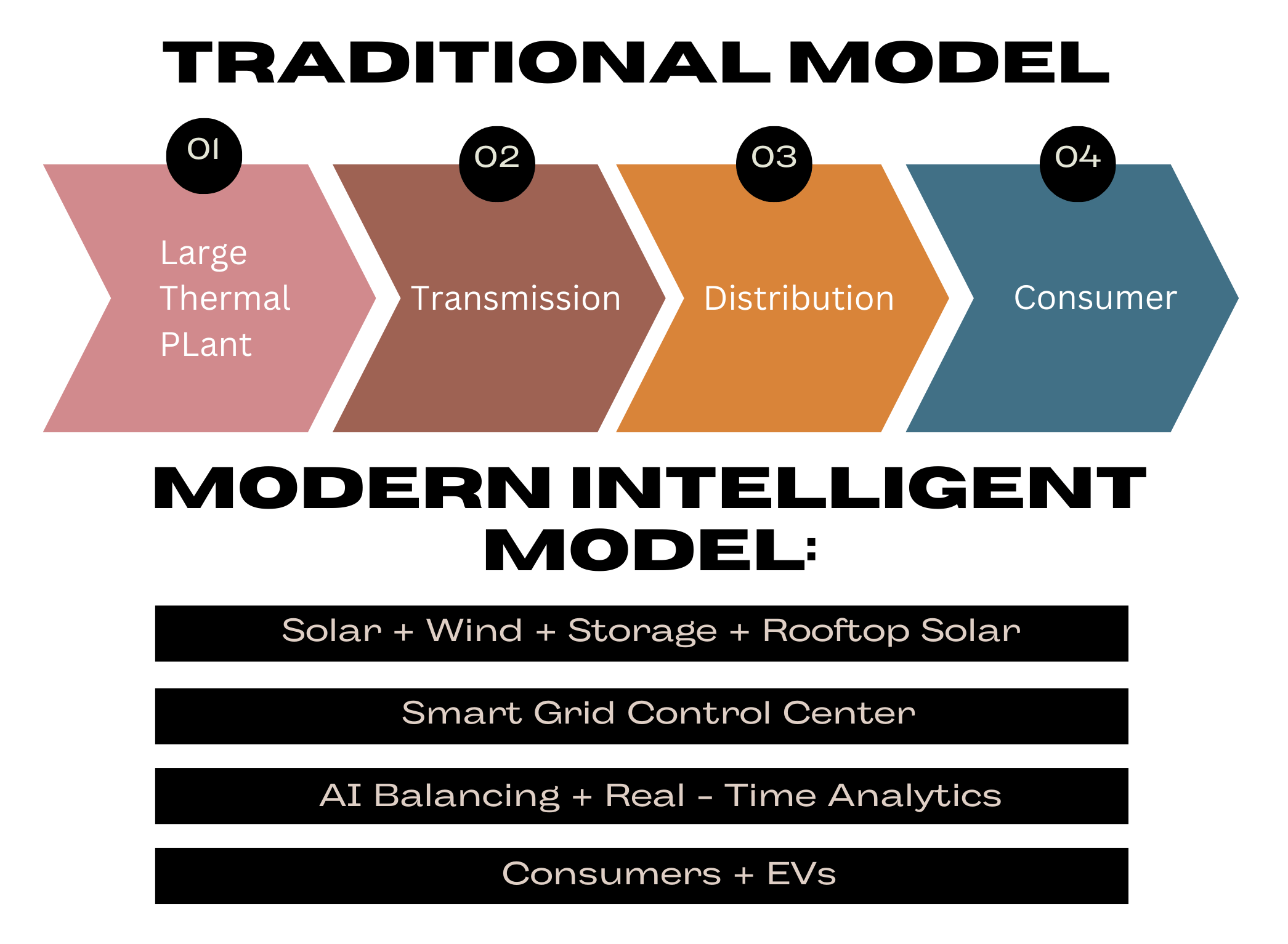
In the intelligent model:
- Sensors monitor voltage and frequency in real time
- AI detects congestion before outages occur
- Batteries discharge during peak demand
- Consumers participate through dynamic pricing
Smart meter rollouts across states allow utilities to implement time-of-day tariffs, improve billing efficiency, and reduce aggregate technical and commercial losses.
This digital modernization enhances both decarbonization and financial sustainability.
Industrial Decarbonization through Data
Heavy industries account for a significant share of India’s energy consumption and emissions. Cement, steel, refining, and chemicals require high-temperature processes and continuous energy supply. Decarbonizing these sectors demands precision and optimization.
AI applications in industry include:
- Predictive maintenance of rotating equipment
- Energy load optimization in manufacturing lines
- Real-time kiln and furnace temperature adjustments
- Waste heat recovery optimization
Large industrial conglomerates such as the Tata Group and Reliance Industries are integrating digital systems into sustainability strategies.
By embedding AI into operations, companies reduce energy intensity while maintaining output and profitability.
The result is a compelling business case: lower emissions and lower
operational costs.
Energy Storage: The Flexibility Engine
Renewable expansion must be paired with energy storage. Battery Energy Storage Systems (BESS), pumped hydro, and hybrid renewable-storage projects are gaining traction.
AI enhances storage economics by predicting when to charge and discharge batteries based on:
- Solar output forecasts
- Demand projections
- Market pricing signals
- Grid congestion levels
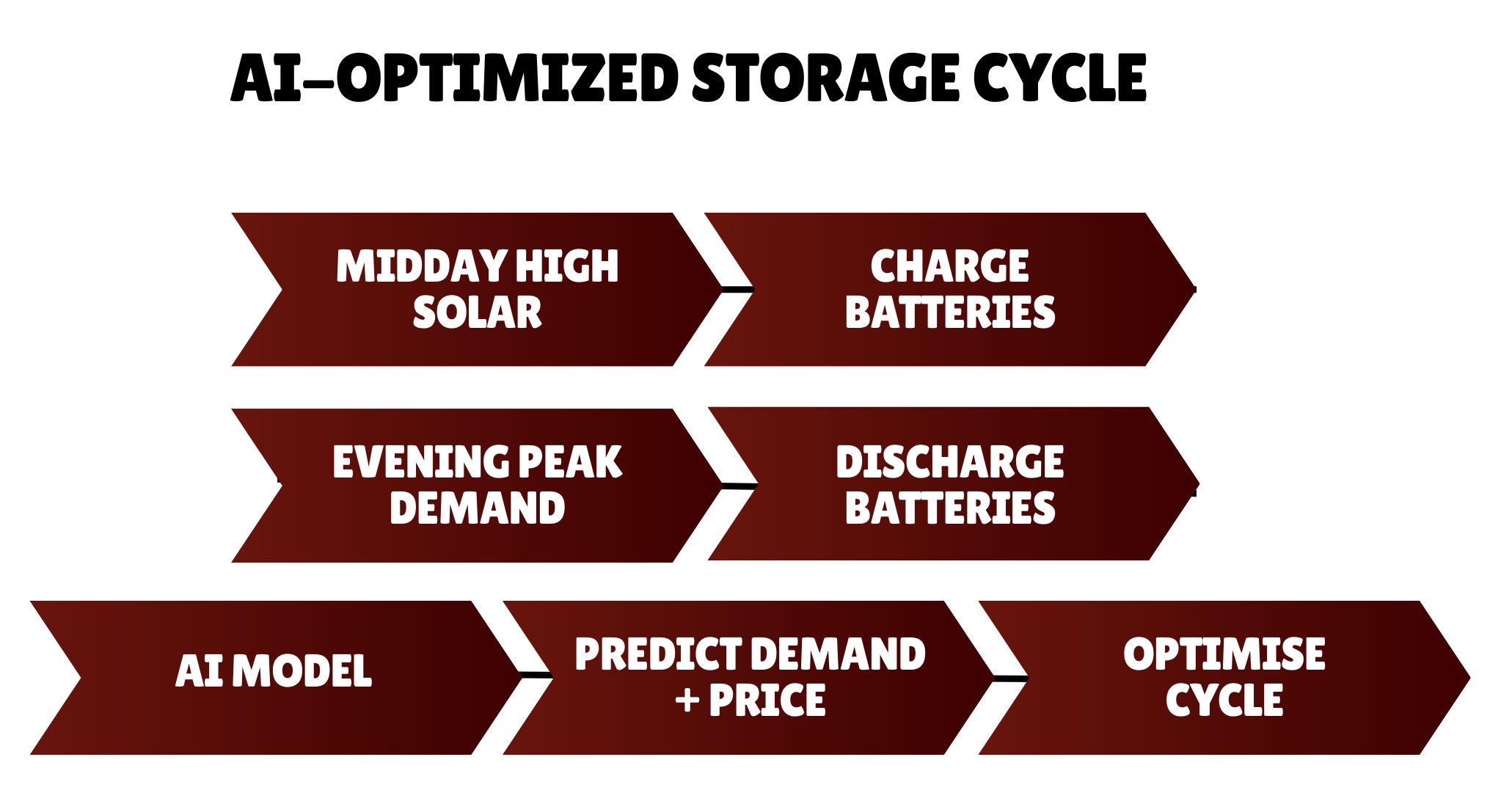
As India’s power markets evolve toward greater flexibility and real-time pricing, AI-driven storage dispatch will become indispensable.
Electric Mobility and Smart Charging
India’s electric mobility transition intersects directly with energy infrastructure. As EV adoption accelerates, electricity demand patterns will shift.
AI-enabled smart charging systems can:
- Schedule charging during off-peak hours
- Avoid transformer overload
- Integrate renewable energy directly into charging stations
- Enable vehicle-to-grid participation
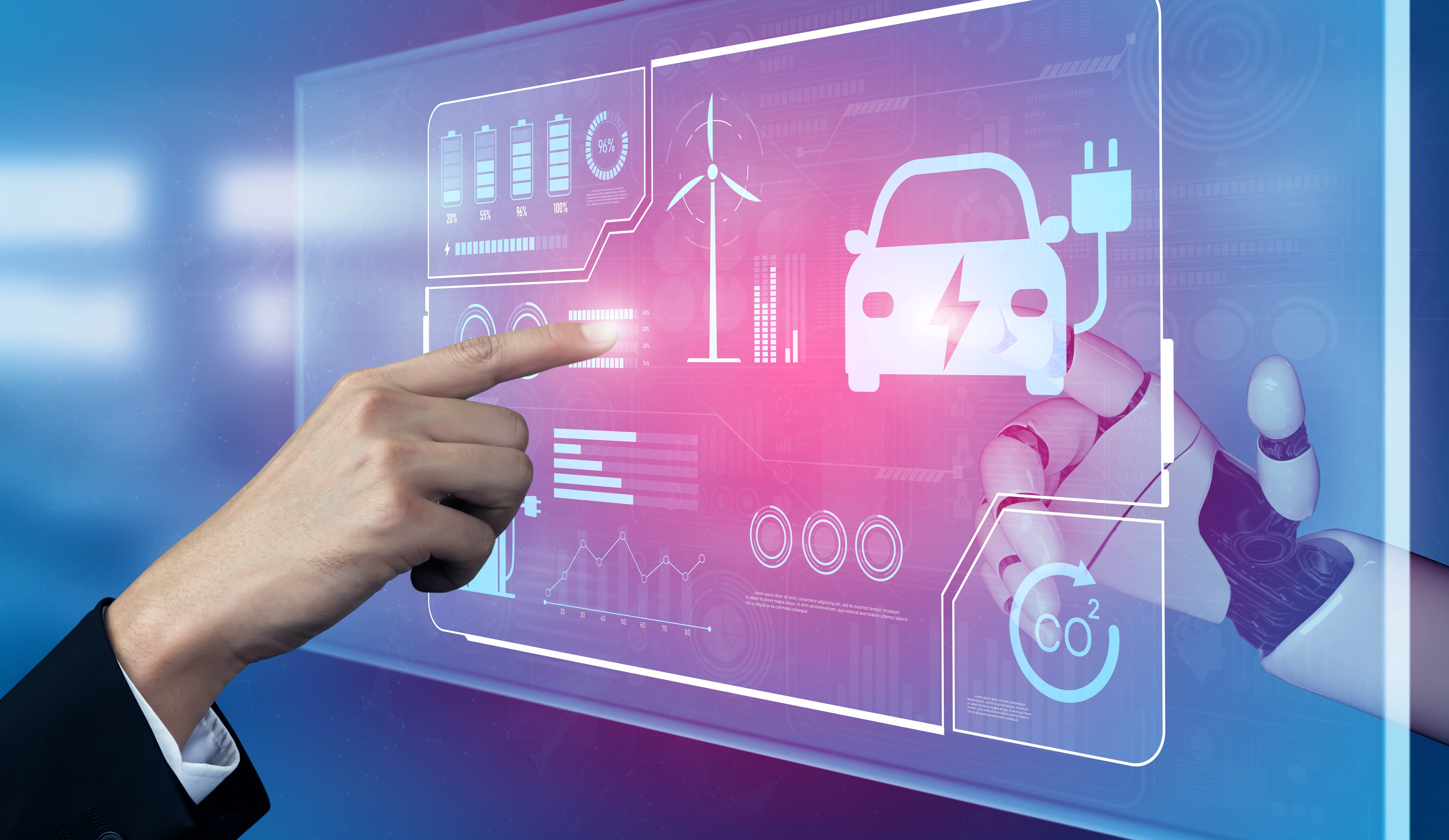
Corporate fleets and logistics providers can leverage AI platforms to optimize routes, charging cycles, and battery health, reducing both fuel costs and emissions.
The integration of mobility and energy intelligence represents a major systems-level opportunity.
Carbon Intelligence and ESG Digitization
Sustainability reporting is evolving rapidly. Investors demand transparency, regulators require compliance, and stakeholders expect accountability.
Data-driven carbon platforms integrate:
- Energy consumption metrics
- Supply chain emissions data
- Emission factors databases
- Financial performance indicators
AI models simulate decarbonization pathways and forecast regulatory risks under carbon pricing scenarios. This enables leadership teams to make informed capital allocation decisions.
Digital ESG platforms also reduce greenwashing risk by automating verification and creating auditable data trails.
Rural and Distributed Energy Transformation
India’s energy transition must remain inclusive. Rural electrification, agricultural productivity, and small enterprise development depend on reliable power access.
Solar-powered irrigation pumps, decentralized microgrids, and renewable cold storage systems are transforming rural economies. AI-driven demand forecasting ensures microgrid stability even with fluctuating generation.
Digital payment systems improve revenue realization for rural utilities, strengthening financial sustainability.
This convergence of clean energy and digital innovation enhances livelihoods while advancing climate goals.
Climate Finance and Data Transparency
Scaling climate solutions requires large capital flows. Investors increasingly evaluate projects based on measurable performance data.
AI enhances investor confidence by:
- Predicting asset performance
- Modeling weather risks
- Optimizing portfolio allocation
- Tracking real-time emissions reduction
Green bonds, sustainability-linked loans, and blended finance structures rely on accurate data to maintain credibility. Transparent digital systems lower risk premiums and unlock investment at scale.
Workforce Transformation in the AI-Energy Era
India’s energy transition requires new skill sets that combine engineering, analytics, and sustainability expertise.
Future-ready organizations must invest in:
- Data scientists with energy domain knowledge
- AI engineers specialized in industrial systems
- Sustainability analysts fluent in carbon accounting
- Cybersecurity experts protecting critical infrastructure
Public-private partnerships and corporate upskilling initiatives will play a vital role in building this talent ecosystem.
Cybersecurity and Resilience
As grids become digital, cybersecurity becomes mission-critical. AI systems must operate within secure, encrypted architectures.
AI-driven anomaly detection can identify unusual patterns in grid behavior, flagging potential cyber threats before disruption occurs. Resilience planning ensures that digital transformation does not compromise reliability.
Security is foundational to trust and trust is foundational to scaling climate solutions.
Integrating Policy, Technology, and Capital
India’s energy transition is not driven by technology alone. It is shaped by policy direction, market incentives, regulatory reform, and institutional coordination.
To scale effectively:
- Renewable expansion must align with transmission upgrades
- Storage deployment must align with pricing reform
- Corporate sustainability must align with digital transformation
- Climate finance must align with data transparency
A systems-level approach ensures that investments reinforce each other rather than operate in silos.
Strategic Imperatives for Corporate Leaders
Organizations seeking to lead in this new energy paradigm should focus on five priorities:
- Build Robust Data Foundations – Clean, interoperable data systems are prerequisites for AI deployment.
- Embed AI into Core Operations – Move beyond pilot projects to enterprise-scale integration.
- Align Sustainability with Strategy – Treat decarbonization as a growth lever, not a compliance exercise.
- Invest in Partnerships – Collaborate with startups, utilities, research institutions, and policymakers.
- Measure and Communicate Impact – Quantify emissions reductions and operational gains transparently.
Leadership in the energy transition requires both technological capability and organizational commitment.
India’s Global Leadership Opportunity
India’s scale makes it a laboratory for climate innovation. Solutions developed here, low-cost solar deployment models, AI-enabled grid balancing, digital carbon platforms, can be replicated across emerging markets in Asia, Africa, and Latin America.
With its strong digital backbone, entrepreneurial ecosystem, and ambitious climate targets, India is uniquely positioned to demonstrate how economic growth and decarbonization can coexist.
The intersection of data, AI, and clean energy represents one of the most powerful transformation narratives of the 21st century.
Intelligence as the Catalyst for Climate Scale
India’s energy transition is no longer a linear shift from fossil fuels to renewables. It is a multidimensional transformation powered by digital intelligence.
- Data provides visibility.
- Artificial Intelligence provides optimization.
- Renewable energy provides sustainability.
Together, they create a resilient, adaptive, and future-ready energy system.
For corporate leaders, the implications are clear. Climate solutions must be embedded into core business strategy. Investments in digital infrastructure and AI capability are investments in long-term competitiveness. Organizations that harness intelligence to scale sustainability will lead not only in compliance but in innovation, profitability, and global influence.
India’s journey demonstrates that climate ambition and economic aspiration are not opposing forces. When powered by data and Artificial Intelligence, they become mutually reinforcing engines of progress.
The Author is the Director General and Distinguished Research Fellow, Indian Institute of Sustainable Development (IISD), New Delhi