‘India’s Resilience Story Will Continue in 2026 Despite Global Headwinds’
At a time when the global economy is grappling with persistent uncertainty—from geopolitical conflicts to
shifting trade dynamics—India’s growth narrative continues to stand out for its resilience and forward
momentum. In this insightful piece, Neha Anna Thomas, Associate Director, Economic Analytics at Frost &
Sullivan, explores how India is navigating near-term global headwinds while sustaining its position as one of
the world’s fastest-growing major economies.
She delves into the country’s strong domestic fundamentals, evolving policy landscape, and proactive trade
strategies that are reinforcing long-term growth and stability. Highlighting both the opportunities and risks
that lie ahead, the author offers a clear lens into how businesses can position themselves to capitalize on
India’s expanding economic potential.
Read her article to gain a deeper understanding of India’s economic trajectory and what it means for growth,
investment, and global competitiveness.
If you’ve been closely monitoring India’s GDP growth figures over the past few years, one narrative remains
unchanged: India’s domestic resilience and sustained growth in the face of recurring global disruptions. This
trend is expected to continue in 2026.
The global economy has been susceptible to recurring disruptive events and shocks over the past few years,
from the onset of the Russia-Ukraine war in 2022 to newly launched tariffs wars in 2025. India has managed to
weather this external turbulence well, supported by domestic strength, registering an average GDP growth
rate of around 7% over the past few years 1 . India’s strong growth performance has, in fact, earned it
recognition as the world’s fastest-growing major economy and a global economic bright spot.
For the year ahead, Frost & Sullivan forecasts a moderate slowdown in global economic growth, from 3.4% in
2025 to 2.9% in 2026. This slowdown is especially linked to the West Asia conflict. India is also expected to see
a minor slowdown; however, its projected growth of 6.5% for 2026-27 puts it well above global peers. Growth
above 6% remains commendable in a period of renewed volatility. India’s growth constraints for the current
fiscal year will stem from a combination of higher oil prices, trade and supply chain disruptions linked to the
West Asia conflict, and possible monsoon disruptions. Nonetheless, considering India’s underlying domestic
resilience, the Indian economy could outperform growth expectations, supported by domestic demand or
capital expenditure push.
Multi-Pronged Policy Measures and Accelerated Trade Deals Will Strengthen India’s Long-Term
Growth and Resilience
This is the era of global trade and supply chain reorientation, or globalization 2.0, whereby corporations are aggressively diversifying their sourcing and production beyond single geographies or high-risk locations, especially in the face of recurring geopolitical shocks. India, backed by supportive industrial policies and rapid trade partner diversification, has positioned itself as a top global contender to attract new manufacturing and FDI inflows. Industrial incentives are already showing results, including a 775% increase in mobile phone exports growth between 2020-21 and 2024-252. This is a strong indicator that policies such as Production-Linked Incentive (PLI) schemes are proving beneficial across several sectors, including electronics, pharmaceuticals, IT and hardware, and advanced telecom gear.
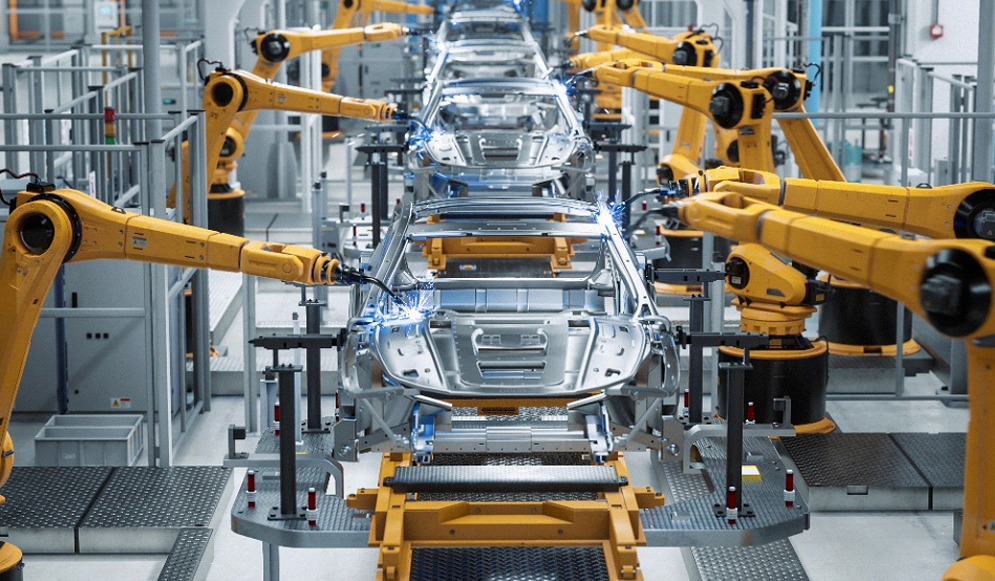
India’s export performance is also complemented by the active pursuit of free trade deals, which is helping diversify the country’s trade partner mix and limit risk exposure in the face of external shocks. Since 2021, India has signed several trade agreements, including Free Trade Agreements (FTAs) with key partners such as European Union and New Zealand, with six trade deals under negotiation with Australia, Sri Lanka, Chile and more, and upcoming negotiations with the Gulf Cooperation Council (GCC), and Canada3. These agreements will help integrate India's critical manufacturing sub-sectors (including high-value-added segments such as pharmaceuticals and automotive components) into Western and Asian supply chains and end-markets, providing diversified market access while mitigating against global protectionist volatility.
Preparing Your Business for Expansion in India — Strategic Considerations
There is little doubt that India features prominently in the expansion plans for both international and local firms, supported by growth drivers including its high-growth status, a demographic dividend, policy support, and growing prominence in the international trade and investment space. While investors may still be cautious about the unique challenges of doing business in India, these growth drivers remain critical to attracting new investments in a changing global investment landscape.
What key risks and opportunities should companies assess and prioritize when considering expansion in India?
- With GDP growth rates as high as 6-7% and strong domestic demand potential, companies should increasingly target the Indian consumer market. Additionally, with the next phase of growth to come from beyond India’s metro cities, companies should actively expand their offerings into India’s tier-2 and tier-3 cities.
- Beyond tapping the local market, companies operating in India must also develop a diversified trade strategy- both to export across multiple geographies and to ensure import access to critical manufacturing inputs. Especially with India’s growing trade agreement network, businesses should revisit sourcing and new market strategies to capitalize on the benefits from newer trade deals.
- Finally, in 2026, downside risks remain for India’s near-term growth trajectory, because of trade and energy uncertainty linked to the West Asia conflict. To navigate this period of volatility, companies should build a dynamic, scenario-driven playbook rather than rely on static forecasts. This will serve as a critical competitive differentiator and shock absorber, helping companies plan for and respond to global crosscurrents.
1IMF, Ministry of Statistics & Programme Implementation, Press Information Bureau; Frost & Sullivan
2 Ministry of Commerce and Industry
3 Ministry of Commerce and Industry
Written together with Nikita Talnikar, Senior Research Analyst, Economic Analytics, Frost & Sullivan