A bold 2047 vision that turns gold from an import worry into a national growth engine -Presenting an extract from Swarnim Udaan 2047, developed by the World Gold Council in partnership with Monitor Deloitte.
The North Star for India's gold revolution
For decades,
India's gold narrative has largely been shaped by concerns around imports and external dependence. Yet this
perspective captures only a fraction of gold' s true potential. Swarnim Udaan 2047 presents a different vision –
one that recognises gold not merely as a consumption good,
but as a strategic national asset that can mobilise household wealth,
strengthen domestic supply chains,
accelerate industrial innovation,
deepen financialisation and contribute meaningfully to India's growth ambitions.
Swarnim Udaan is the ascent of India's Sone ki Chidiya (Golden Bird), not merely to reclaim its historic
stature as a land of gold, but to advance it into a modern, formal, innovative and globally influential gold
economy.
Role of Gold in India’s Growth Story
India stands at the cusp of a transformative economic era. Anchored in the vision of Viksit Bharat 2047,
the country is seeking to accelerate capital formation,
strengthen manufacturing competitiveness,
deepen financial markets,
foster innovation and create sustainable livelihoods at scale. As India charts this next phase of development,
it must identify and leverage strategic sectors and assets capable of contributing meaningfully to long–term
national prosperity.
Among these,
gold occupies a unique position. Beyond its cultural significance and role as a store of wealth,
gold supports millions of livelihoods across the jewellery value chain,
underpins a globally competitive manufacturing and export ecosystem,
serves as a critical component of financial markets and is emerging as an important input into advanced
industrial applications. As economies become increasingly technology–driven and focused on resilience,
gold’s role is expanding from a traditional consumption and investment asset to a strategic resource capable of
supporting growth,
innovation and competitiveness.
Five pillars for accelerating growth across India’s gold ecosystem
Promoting “Mine in India”
Historically,
India’s gold demand has been immense,
yet domestic production remains limited despite significant geological potential. India possesses approximately
6.88 lakh per sq. km of Obvious Geological Potential (OGP),
of which only around 30% has been explored. This suggests that the country’s currently identified gold resource
base may represent only a fraction of its broader mineral potential.
Unlocking this untapped opportunity can strengthen supply resilience,
support economic development and reduce import dependence over the long term.
Recent auctions of gold mining blocks demonstrate the government’s commitment to reserve assets and stores of
value,
gold is resilient and long–term growth will unlock this potential. Building on this momentum will require
targeted reforms that encourage private explorers to convert discoveries into production.
Streamlined clearances,
enhanced incentives,
dedicated financing and adoption of advanced technologies such as AI–enabled exploration and automation can help
accelerate mine development and output. Equally important is developing a future–ready workforce by positioning
mining as an innovative,
technology–driven and sustainable career pathway.
Amid persistent geopolitical tensions and concerns over external vulnerabilities,
the importance of strengthening domestic gold supply channels has come into sharper focus. Ongoing policy
efforts and public statements that highlight India’s dependence on imported bullion underscore the strategic
need to expand domestic sources of gold through mining and recycling.
Making India “Jeweller to the World”
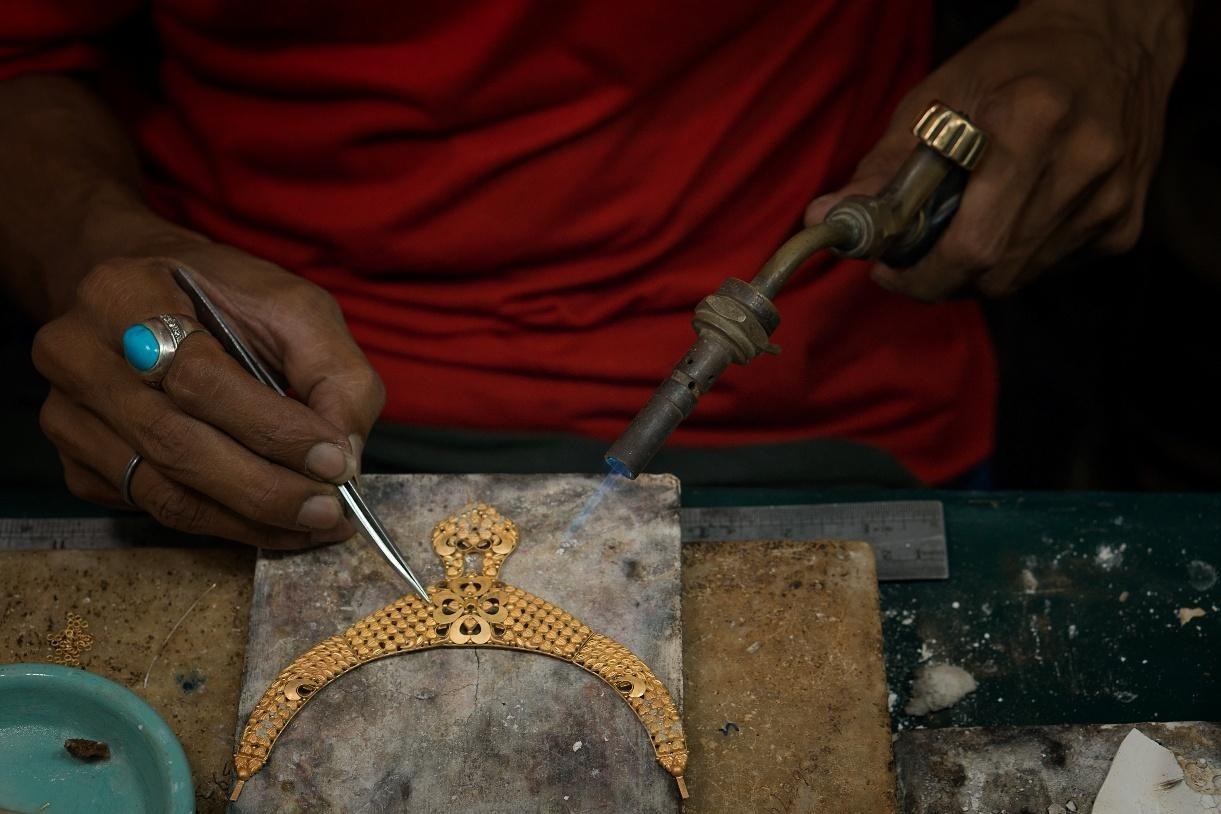
Exports are another critical lever for strengthening ‘Brand India’ in global markets. While India is already
among the world’s largest exporters of gold jewellery,
substantial potential remains to strengthen its position in international markets. The experience of leading
jewellery–exporting nations demonstrates that export leadership is built not only on production volumes,
but also on strengths in branding,
design,
manufacturing scale,
refining and global market connectivity. India’s opportunity lies in building these capabilities at scale while
leveraging its deep–rooted expertise in jewellery craftsmanship,
design and manufacturing.
Achieving this ambition requires a targeted strategy focused on identifying and prioritising high–potential
export markets across North America,
Europe,
the Middle East and emerging regions where demand for jewellery continues to grow. Understanding evolving
consumer preferences,
design trends,
quality expectations and distribution channels within these markets will be critical to building sustainable
competitive advantage.
Complementing this market-led approach,
India must continue strengthening manufacturing competitiveness,
design capabilities,
branding,
trade facilitation and supply chain efficiency. Together,
these interventions can elevate the “Made in India” value proposition and establish India as the preferred
global hub for jewellery design,
manufacturing and exports.
Enabling greater financialisation of gold
Evolving consumer preferences are also poised to catalyse gold’s financialisation in India – replicating the
transformation seen in advanced economies. India’s household gold holdings represent one of the country’s most
significant yet underutilised economic resources.
Mobilising even a small share of these holdings could unlock significant economic value by deepening financial
markets,
enhancing liquidity and strengthening capital formation. While the Gold Monetisation Scheme (GMS) laid the
foundation for bringing household gold into the formal economy,
the next phase of financialisation must be driven by an integrated ecosystem that connects GMS,
recycling networks,
Electronic Gold Receipts (EGRs),
digital gold,
bullion banking and gold–backed financial products. By enabling seamless movement of gold across physical and
financial markets,
such interoperability can enhance liquidity and transform dormant household holdings into a productive economic
asset,
accelerate participation across the value chain and position gold as a dynamic engine of India’s growth and
prosperity.

Reimagining gold jewellery for the modern consumer
Moreover,
India’s gold jewellery market is at an inflection point. While tradition and trust continue to influence
purchase behaviour,
structural shifts – driven by rising consumer aspirations,
digital adoption and regulatory reforms – are creating new opportunities to expand demand,
deepen engagement and build a more resilient ecosystem. Consumers today expect convenience and personalisation
in equal measure,
pushing the industry to innovate beyond its traditional strengths. At the same time,
the government’s hallmarking push,
the rise of organised retail and the evolving role of gold as a lifestyle product can redefine the contours of
the market,
with implications across a value chain that supports substantial value.
Unlocking gold’s potential as a strategic national asset and mineral
Lastly,
gold’s contribution to India’s economy extends beyond its traditional role in jewellery,
investment and reserves. As India advances towards its Viksit Bharat ambitions,
demand for advanced materials to enable next–generation industries is expected to grow significantly. Gold is
already a critical input across semiconductors,
electronics,
biotechnology,
aerospace,
diagnostics and artificial intelligence,
where its unique properties support high–performance and precision applications.
In recognition of this evolving role,
countries are increasingly adopting differentiated approaches to gold. While financial centres have strengthened
bullion ecosystems to enhance their competitiveness as global trading and refining hubs,
the United States has recognised gold’s strategic importance within its critical minerals framework which
supports advanced manufacturing,
technology and economic security.
For India,
harnessing gold’s broader strategic role can unlock value across the entire ecosystem. A more integrated policy
approach could strengthen resource security,
expand domestic mining and refining capabilities,
increase investment across the value chain,
support innovation and advanced manufacturing,
enhance supply chain resilience and increase participation in high–value global value chains. Moving beyond a
consumption–centric view of gold and integrating it more fully into India’s financial strategies will allow gold
to become a stronger enabler of economic resilience,
competitiveness and long–term prosperity.
INFOGRAPHICS:
Indian gold industry in 2047: vision and milestones that define success
Gold’s contribution to India extends well beyond the sector itself. By 2047,
a stronger,
more integrated gold ecosystem could contribute meaningfully to national priorities,
from manufacturing and exports to financial resilience,
innovation and economic growth. The boxed ambition statement sets out this long–term vision,
while the bullets that follow illustrate what success could look like in achieving it.
 1
India expands responsible domestic gold mining
10–15% of India's annual gold demand met through domestic mining , strengthening resource security and reducing reliance on imported gold.
- 50%+of India's OGP explored, with multiple world–class mines operational
- Faster,
digital mine approvals unlock higher exploration investment
- 1,
000–1,
500 direct jobs per mine with each job supporting 6–10x induced employment
 2
India becomes the leading jewellery export hub
#1 jewellery exporter globally by 2047 vs current 5th largest, leveraging India's manufacturing strengths, design capabilities and growing global presence
- Jewellery emerges as one of India's largest value–added export industries, driving manufacturing,
employment and global competitiveness.
- Expanded global market share,
anchored in quality,
compliance and a stronger “Made in India” brand positioning
 3
India's gold stock fuels national capital
10–15% of household gold to be mobilised through an integrated bullion banking ecosystem, unlocking dormant assets to support investment and growth
- Gold–backed savings,
investment and financial products become mainstream,
including for pension funds and insurers
- India builds globally competitive bullion banking,
trading and financial infrastructure
 4
India leads the future of jewellery retail
2 in every 3 young Indians participates in the gold jewellery ecosystem, while driving greater value capture through design and innovation
- Universal hallmarking,
traceability and stronger consumer protection become industry standards
- Indian omnichannel retail gold global benchmarks in design,
trust and customer experience
 5
Gold powers India's strategic and industrial ascent
A driver of economic resilience, advancing high–value manufacturing, innovation and strategic industries
- Gold–enabled technologies support India's ambitions in semiconductors, electronics, biotechnology,
aerospace and other strategic sectors
- India emerges as a leading regional bullion,
innovation and advanced manufacturing hub for gold